
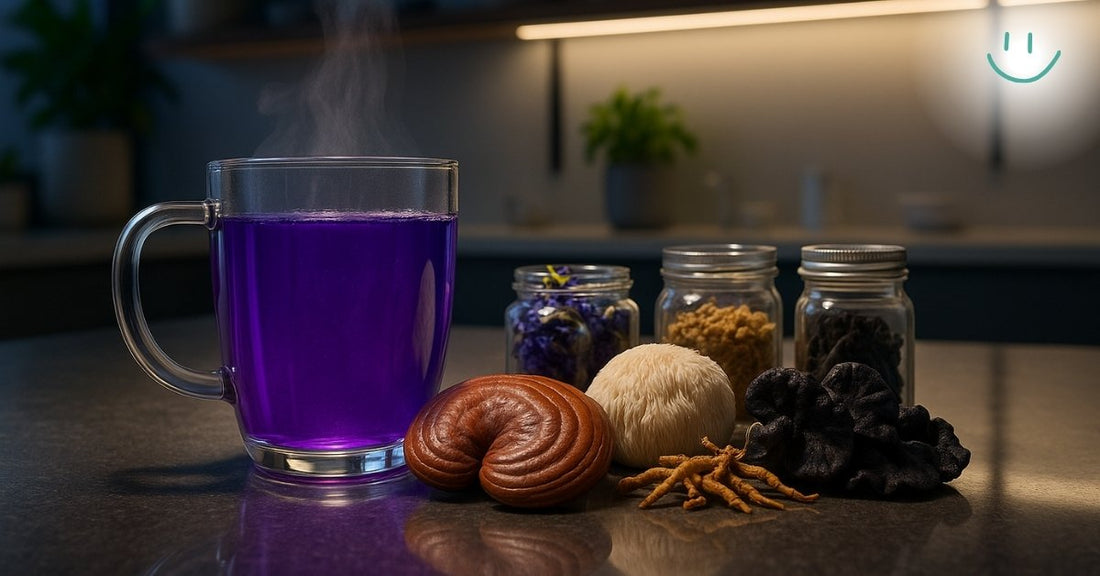
Adaptogenic Tea Benefits: How Herbal Blends Support Stress, Focus, and Resilience
In our fast-paced world, more people are turning to adaptogenic herbal teas to help manage stress, support mental clarity, and build resilience. But what exactly are adaptogens? How do they work in the body, and which adaptogenic herbs and mushrooms should you look for in a tea blend? This article breaks down the science behind adaptogenic tea benefits, explores the unique adaptogens in Tea For Life, and helps you understand how a daily cup can become a powerful wellness ritual.
What Are Adaptogens?
Adaptogens are a class of herbs, roots, and fungi that help the body “adapt” to physical, mental, and emotional stressors. The concept comes from traditional medicine systems—such as Ayurveda and Traditional Chinese Medicine—but has been widely studied by modern scientists since the mid-20th century.
How do adaptogens work? Adaptogens interact with the body’s hypothalamic-pituitary-adrenal (HPA) axis and the sympathoadrenal system. In simple terms, they help regulate the body’s stress response, promoting balance (homeostasis) rather than overstimulation or fatigue. When you’re under stress, adaptogens can help your body recalibrate, potentially reducing the negative effects of stress on mood, energy, and even immune function.
How Does Adaptogenic Tea Benefit the Body?
Drinking adaptogenic tea is a gentle, natural way to:
-
Promote calm and mental clarity
-
Boost resilience to stress
-
Support immune function
-
Balance mood and energy
These benefits stem from the combined action of adaptogenic botanicals, especially when used as part of a daily wellness ritual.
Adaptogenic Mushrooms in Tea For Life
1. Reishi (Ganoderma lucidum)

Known as the “Mushroom of Immortality” in Traditional Chinese Medicine, Reishi is celebrated for its ability to help the body manage stress and support overall wellness.
Key benefits:
-
Modulates the immune system
-
Promotes relaxation and restful sleep
-
May reduce fatigue and support mood balance
2. Lion’s Mane (Hericium erinaceus)

Lion’s Mane is a unique mushroom famous for its support of cognitive function and nerve health.
Key benefits:
-
Supports focus, memory, and mental clarity
-
May stimulate nerve growth factor (NGF)
-
Traditionally used to boost brain health and emotional resilience
Learn about Lion’s Mane’s cognitive effects
3. Cordyceps (Cordyceps militaris)

Cordyceps is prized in both Eastern and Western herbalism for its energizing properties.
Key benefits:
-
Enhances energy and stamina
-
Supports healthy oxygen utilization
-
May help the body adapt to physical and mental fatigue
Read about Cordyceps and performance
4. Black Fungi (Auricularia auricula-judae)

Also known as Wood Ear Mushroom, Black Fungi is less commonly discussed but is valued in herbal traditions for its gentle, adaptogenic effects.
Key benefits:
-
Supports cardiovascular and immune health
-
Rich in antioxidants
-
May help the body adapt to stressors
More on Black Fungi’s health effects
Other Adaptogens Commonly Used in Tea
In addition to mushrooms, many adaptogenic herbs are found in wellness teas:
-
Ashwagandha – An Ayurvedic root renowned for balancing stress hormones and supporting restful sleep.
-
Rhodiola rosea – Known for fighting fatigue and improving mental performance under stress.
-
Holy Basil (Tulsi) – Used to balance mood and protect against the effects of chronic stress.
-
Schisandra – A berry that supports endurance and resilience in traditional Chinese medicine.
While these herbs aren’t all in Tea For Life, many adaptogenic blends on the market feature combinations tailored for energy, focus, or relaxation.
How to Use Adaptogenic Tea
Consistency is key. Adaptogenic teas like Tea For Life are most effective when enjoyed regularly as part of a holistic self-care routine. Here are some simple ways to include them in your day:
-
Morning: Start your day with a cup to promote focus and a calm mindset.
-
Midday: Support energy and resilience during work or stressful periods.
-
Evening: Wind down with a blend featuring calming adaptogens (like Reishi and Lion’s Mane).
Choosing a Quality Adaptogenic Tea Blend
Look for teas that:
-
Clearly list adaptogenic ingredients (no vague “proprietary blends”)
-
Use natural, high-quality botanicals
-
Are free from artificial flavors and sweeteners
Tea For Life is crafted with a focus on transparency, multi-benefit botanicals, and a plant-forward, holistic philosophy.
Conclusion
Adaptogenic tea blends offer a science-backed, natural way to help your body and mind adapt to stress, support focus, and build resilience. By choosing a quality blend featuring proven adaptogens—like the mushrooms found in Tea For Life—you’re not just enjoying a delicious cup, but investing in your everyday wellness.
Ready to experience the benefits? Discover Tea For Life and make adaptogenic tea part of your self-care routine.